
Phone: +86 15398058207
E-mail: sales@astraroll.com
Add: Room 603 Building C, The Huixin Center, Zhangba One Road, Yanta Zone, Xi'an City, Shaanxi Province, China
What Exactly is a Banana Roller? For the Web Handling Industry
In the web handling and converting industry, there are few things more frustrating than longitudinal wrinkles, baggy edges, or slit lanes interlocking on a rewinder. These defects lead to massive material waste, machine downtime, and rejected products.
Enter the Banana Roller—the industry's ultimate defense against web instability.
Also known formally as a Bowed Spreader Roller or Expander Roll, this uniquely shaped component is a staple in paper mills, plastic film extrusion lines, and high-speed slitters. But what exactly is it, how does it work, and more importantly, how do you choose the right one for your production line?
Let's dive into the engineering behind banana rollers.
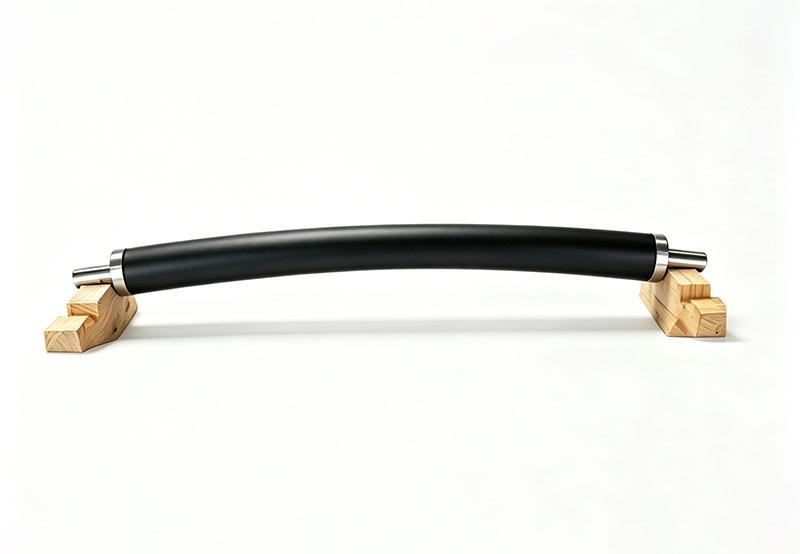
What is a Banana Roller and How Does It Work?
Despite its funny nickname, the banana roller is a highly precise piece of engineering. It gets its name from its distinct, fixed-curve shape.
The Working Principle: A banana roller consists of a stationary, curved inner axle. Mounted along this curved axle are a series of high-precision, free-spinning bearings. An outer sleeve (either flexible rubber or segmented metal) covers these bearings.
As your web (paper, film, foil, or textile) travels over the convex curve of the roller, the physics of the bow forces the web to travel outward from the center toward the edges. This constant, cross-machine stretching action instantly pulls out wrinkles and creates an evenly tensioned, perfectly flat web before it enters a critical process like coating, printing, or rewinding.
The Big Dilemma: Rubber-Coated vs. Metal Banana Rollers
When sourcing a banana roller, the most critical decision you will make is choosing the outer sleeve material. Making the wrong choice here can result in poor traction, web damage, or catastrophic roller failure.
At AstroRoll, we engineer both primary types to suit different industrial environments:
1. For Standard & Delicate Webs: Rubber-Coated Banana Rollers
For the vast majority of plastic films, textiles, and standard paper converting lines, rubber is the go-to choice. Rubber provides excellent surface grip (traction), ensuring the web doesn't slip over the roller.
However, not all rubber is created equal. Depending on your process temperatures and chemical exposure, you need the right elastomer compound. Standard cheap rubber will crack, glaze over, or leave residues on your product.
The AstroRoll Solution: Our Custom Rubber-Coated Banana Rollers are engineered with premium, application-specific compounds (such as NBR, EPDM, or Silicone). We customize the Shore hardness to ensure aggressive spreading power while remaining gentle enough to protect ultra-thin and delicate films from scratches.
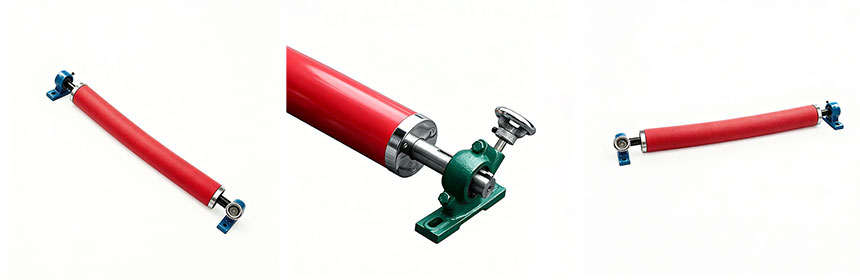
2. For Extreme Tension & Abrasive Webs: Heavy-Duty Metal Banana Rollers
If you are running a high-speed slitter rewinder, a heavy paper mill line, or processing sharp metallic foils, a rubber sleeve will not survive. Under massive tension, rubber deforms. Against sharp slit edges, rubber gets shredded.
In these extreme environments, you need solid metal. But how does a solid metal tube bend and rotate?
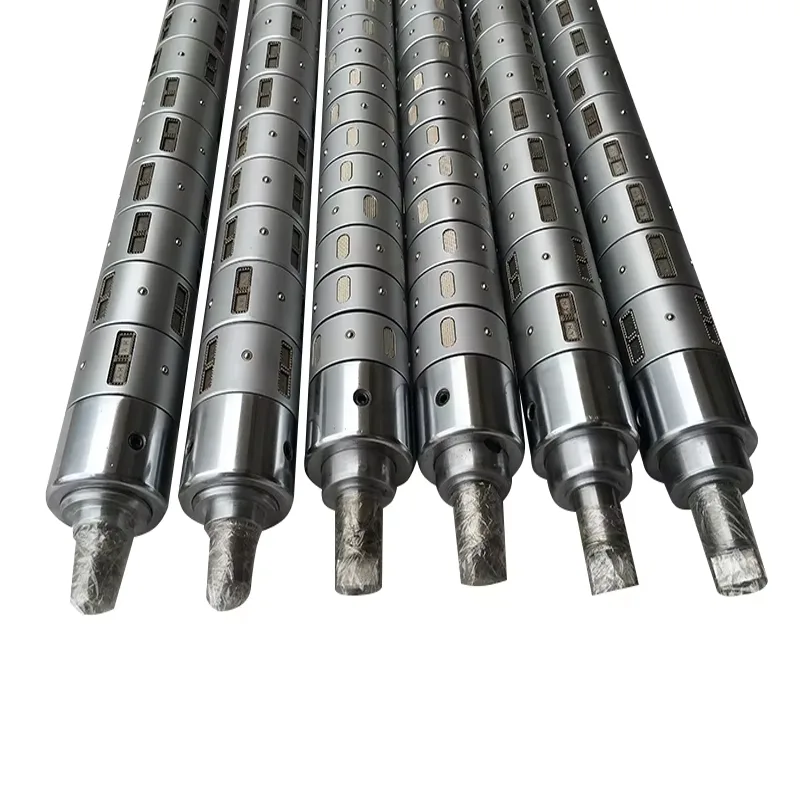
The AstroRoll Solution: The answer lies in our Heavy-Duty Segmented Metal Banana Rollers. Instead of a single flexible sleeve, the outer rotating surface is made of interlocking, precision-machined metal spools (segments) made of Stainless Steel or Hard Chrome-plated steel. These segments rotate seamlessly to mimic a curved surface while offering the indestructible wear resistance and high-tension capacity of solid metal.
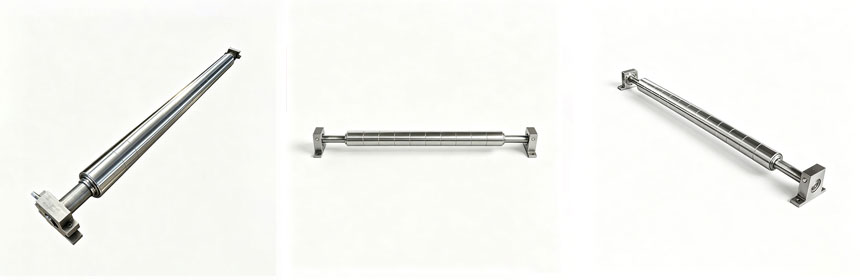
How to Identify a Top-Quality Banana Roller
Whether you choose rubber or metal, a poorly manufactured banana roller will do more harm than good. When evaluating a supplier, look for these three critical quality indicators:
Frictionless Rotation (Bearing Quality): A banana roller must be driven entirely by the web. If the internal bearings are cheap or poorly sealed, the roller will drag. This drag will stretch your material and cause severe surface scratching. AstroRoll exclusively uses premium, low-torque bearings to ensure effortless rotation.
Custom Bow Profiles: There is no "one-size-fits-all" bow angle. The curvature must be mathematically calculated based on your machine's wrap angle, web width, and tension parameters. A generic bow might over-stretch your web or fail to remove wrinkles entirely.
Dynamic Balancing: Because of their curved nature, banana rollers are inherently difficult to balance. A poorly balanced roller will cause vibrations (chatter marks) at high speeds. Every AstroRoll is strictly dynamically balanced to guarantee smooth operation at your maximum line speed.
Conclusion
Upgrading to the right banana roller is one of the most cost-effective ways to eliminate waste, improve product quality, and speed up your converting lines.
- Dealing with delicate films and need maximum traction? Explore our Rubber-Coated Banana Rollers.
- Running high-tension paper or high-speed slitters? Upgrade to our Segmented Metal Banana Rollers.

- Anodized Aluminum Rolls vs. PTFE-Coated Aluminum Rolls: What’s the Difference?
- Steel Rolls vs. Aluminum Rolls: How to Choose the Right Roller for Your Line
- Choosing the Right Air Shaft for Web Handling
- Industrial Cleaning Brush Rollers Factory
- Industrial Brush Rollers Factory
- Three common industrial applications of brush rollers
- Is Hard Chrome Plating Enough for Stretch Rolls?
- Explosion proof electric roller