
Phone: +86 15398058207
E-mail: sales@astraroll.com
Add: Room 603 Building C, The Huixin Center, Zhangba One Road, Yanta Zone, Xi'an City, Shaanxi Province, China
Why Choose Alloy Steel Rollers?
In modern industrial production, rollers are widely used in conveyor systems, steel processing, lithium battery equipment, printing, mining, packaging, and heavy-duty manufacturing lines. Choosing the right roller material directly affects equipment lifespan, production efficiency, maintenance frequency, and long-term operating cost.
Among various roller materials, alloy steel rollers are increasingly becoming the preferred solution for heavy-duty and high-performance industrial applications. Compared with ordinary carbon steel rollers and stainless steel rollers, alloy steel rollers offer superior strength, wear resistance, fatigue resistance, and high-temperature performance.
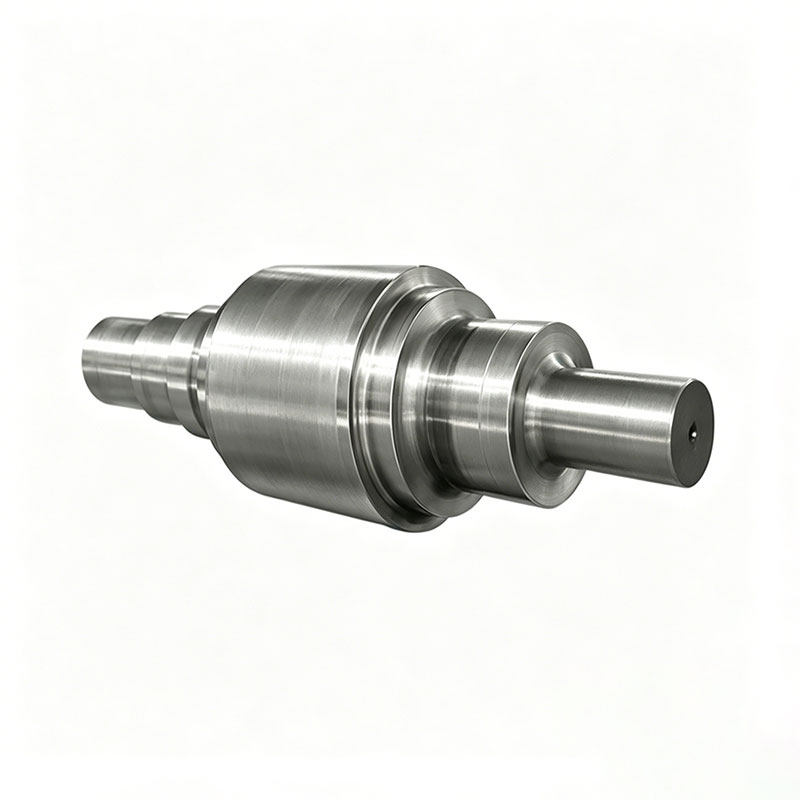
An alloy steel roller is an industrial roller manufactured from steel that contains additional alloying elements such as:
- Chromium (Cr)
- Molybdenum (Mo)
- Nickel (Ni)
- Vanadium (V)
- Manganese (Mn)
These alloying elements are added to improve the mechanical and chemical properties of the steel. Unlike ordinary carbon steel, alloy steel can be engineered for specific industrial conditions such as high temperature, high pressure, high-speed rotation, or abrasive environments.
Common alloy steel materials used for rollers include:
- 40Cr
- 42CrMo
- 20CrMnTi
- 9Cr2Mo
- H13
- SKD11
These materials are widely used in heavy-duty industrial rollers, calender rollers, steel mill rollers, and high-precision processing rollers.
2. Why Choose Alloy Steel Rollers?
1) Higher Strength and Load Capacity
One of the biggest advantages of alloy steel rollers is their exceptional mechanical strength.
Compared with carbon steel rollers, alloy steel rollers can withstand: Higher pressure/ Heavier loads/ Greater impact force/ Faster rotational speed
This is because alloying elements improve the steel's tensile strength and hardenability. Materials like chromium and molybdenum help maintain structural stability even under continuous heavy-duty operation.
For industries such as: Steel manufacturing/ Mining/ Pallet conveyor systems/ Lithium battery calendering
2) Excellent Wear Resistance
Industrial rollers are constantly exposed to: Friction/ Abrasion/ Continuous contact pressure
Ordinary carbon steel rollers gradually wear down in high-friction environments. Alloy steel rollers, however, provide significantly better wear resistance due to their enhanced hardness and carbide structure.
This makes alloy steel rollers ideal for: Steel mills/ Slitting lines/ Mining conveyors/ High-speed production lines/ Heavy-duty conveying systems
Longer wear life means: Lower maintenance costs/ Fewer shutdowns/ Reduced replacement frequency
3) Better High-Temperature Performance
In high-temperature industrial environments, standard carbon steel rollers may soften, deform, or lose strength over time.
Alloy steel rollers are designed to maintain their hardness and dimensional stability under elevated temperatures. Elements like molybdenum and chromium improve heat resistance and thermal stability.
This is especially important for: Hot rolling mills/ Drying equipment/ Heat treatment lines/ Metallurgical conveyors/ High-temperature processing systems
Many rolling mill systems specifically use alloy steel rollers because of their ability to operate reliably under extreme heat conditions.
4) Longer Service Life
Although alloy steel rollers are more expensive initially, they often provide a much longer operational lifespan than ordinary steel rollers.
Their advantages include: Better fatigue resistance/ Higher hardness/ Improved structural stability/ Reduced surface damage
In demanding industrial applications, alloy steel rollers may last several times longer than standard carbon steel rollers.
This significantly reduces: Downtime/ Maintenance labor/ Spare part inventory/ Total lifecycle cost
5) Suitable for Precision Industrial Applications
Alloy steel rollers are commonly used in high-precision equipment because they offer:
Better dimensional stability/ Lower deformation/ Higher machining precision/ Better dynamic balancing performance
Applications include: Lithium battery calender rollers/ Printing rollers/ Precision coating rollers/ Film processing rollers/ High-speed converting machinery
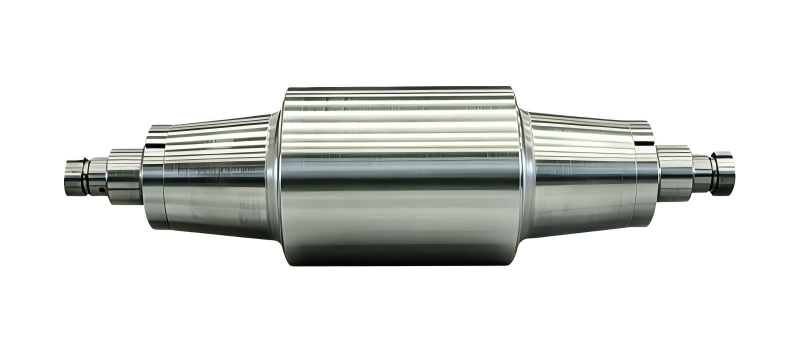
3. Key Differences Comparison
| Item | Steel Roller | Carbon Steel Roller | Stainless Steel Roller | Alloy Roller |
| Definition | General steel category | Ordinary carbon steel | Stainless steel material | Special alloy steel |
| Cost | Wide range | Lowest | Medium to high | Highest |
| Corrosion Resistance | Depends on material | Low | Excellent | Medium |
| Strength | Depends on material | Medium | Medium | Very high |
| Wear Resistance | Medium | Medium | Moderate | Excellent |
| Heat Resistance | Medium | Medium | Good | Excellent |
| Hygiene Level | Depends | Low | High | Medium |
| Main Industries | General industry | Logistics & conveyors | Food & pharma | Heavy industry |
4. How to Choose the Right Roller Material?
Choosing the right roller material depends on several factors:
- Load capacity
- Working temperature
- Humidity and corrosion exposure
- Surface wear conditions
- Production speed
- Budget
- Required service life
For standard conveyor applications, carbon steel rollers may be sufficient.
For hygienic or wet environments, stainless steel rollers are ideal.
For high-load, high-speed, high-temperature, or high-wear industrial systems, alloy steel rollers are often the best long-term investment.
At AstraRoll, we provide high-performance alloy steel rollers engineered for heavy-duty industrial applications. With strict quality control, customized manufacturing, and reliable global service, we help customers achieve longer roller lifespan, higher efficiency, and more stable production performance.

- Anodized Aluminum Rolls vs. PTFE-Coated Aluminum Rolls: What’s the Difference?
- Steel Rolls vs. Aluminum Rolls: How to Choose the Right Roller for Your Line
- Choosing the Right Air Shaft for Web Handling
- Industrial Cleaning Brush Rollers Factory
- Industrial Brush Rollers Factory
- Three common industrial applications of brush rollers
- Is Hard Chrome Plating Enough for Stretch Rolls?
- Explosion proof electric roller