
Phone: +86 15398058207
E-mail: sales@astraroll.com
Add: Room 603 Building C, The Huixin Center, Zhangba One Road, Yanta Zone, Xi'an City, Shaanxi Province, China
Conveyor Types And Applications
In modern industrial production, conveyor systems are essential for improving efficiency, reducing labor costs, and optimizing production workflows. Whether in logistics and warehousing, food processing, mining, or manufacturing, conveyors play a vital role in ensuring smooth operations. This article provides a detailed introduction to the main types of basic conveyor equipment and their functions, helping businesses understand how to choose the right conveyor system.
1. Basic Concept of Conveyor Systems
A conveyor is a mechanical device used to transport materials from one location to another through continuous power-driven movement. Depending on the type of material, operating environment, and transmission method, conveyor systems can be classified into various types. Basic conveyor systems typically consist of the following components:
Frame: Supports the conveyor belt and power system, ensuring overall stability.
Conveyor Belt / Rollers: The medium that carries the material, available in belt, roller, or chain types, suitable for different materials.
Power Unit: Usually composed of motors, gear reducers, or hydraulic systems to drive the conveyor.
Transmission Mechanism: Transfers power through rollers, chains, or screw blades to move the material.
Auxiliary Components: Includes guide wheels, idlers, protective devices, and sorting equipment, ensuring safe, stable, and efficient operation.
2. Common Types of Basic Conveyor Equipment and Their Functions
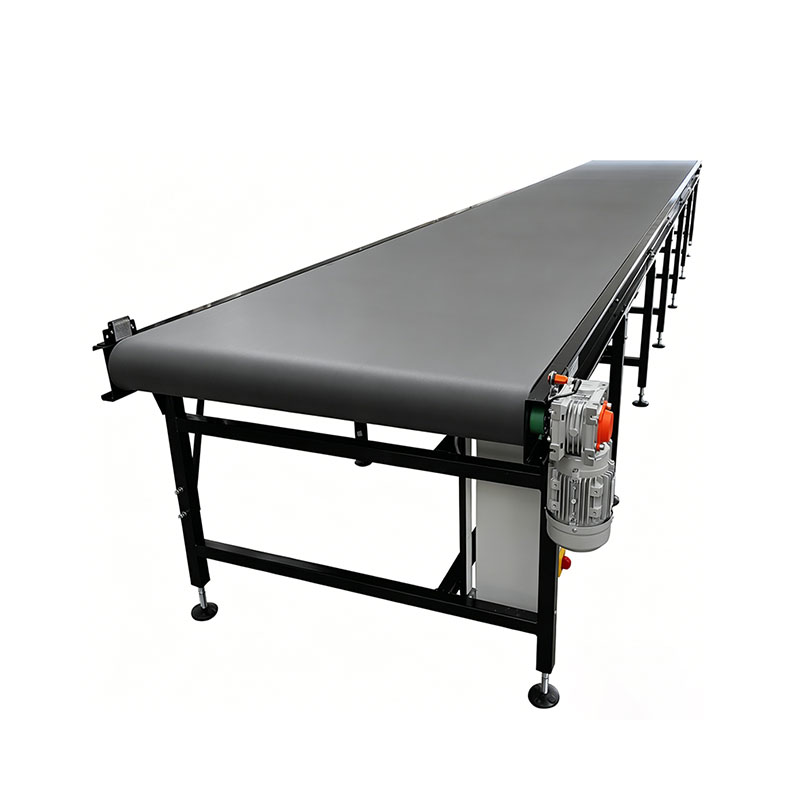
Functions and Features: Belt conveyors are among the most widely used types of conveyors. They transport materials continuously via a moving belt and can operate horizontally, inclined, or along partial curves. Belt conveyors are simple in structure, easy to operate, and capable of carrying materials of various sizes and shapes.
Continuous and Stable Transport: Ensures uninterrupted material flow for high-volume, long-distance transportation.
High Adaptability: Suitable for bulk materials such as coal, ore, grains, and packaged goods like cartons and bags.
Automation Integration: Can work with weighing, sorting, metering, and inspection systems for intelligent production lines.
Ease of Operation and Maintenance: Belt replacement and tension adjustments are straightforward, keeping maintenance costs low.
Applications: Logistics warehouses and parcel sorting centers/ Mining, chemical, and grain processing/ Food processing and packaging industries
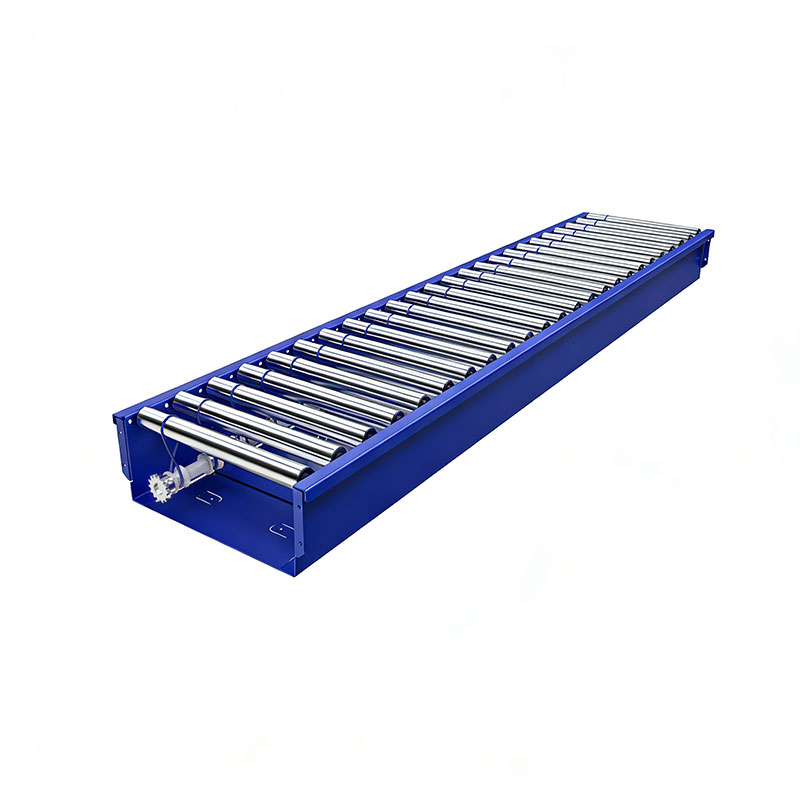
Functions and Features: Roller conveyors move materials over a series of rollers and can operate using gravity or powered drives. They are widely used in industrial production due to their strong load-bearing capacity and ease of maintenance.
Strong Load Capacity: Supports heavy pallets or large boxes, ideal for transporting heavy items.
High Flexibility: Enables sorting, turning, and buffering, easily integrating with other conveyor systems.
Energy Efficiency: Gravity rollers require no power, while powered rollers run smoothly with minimal energy consumption.
Convenient Maintenance: Rollers can be replaced quickly, and the structure is durable for long-term operation.
Applications: Automated warehousing and distribution centers/ Production line material handling/ Heavy pallet and carton transport
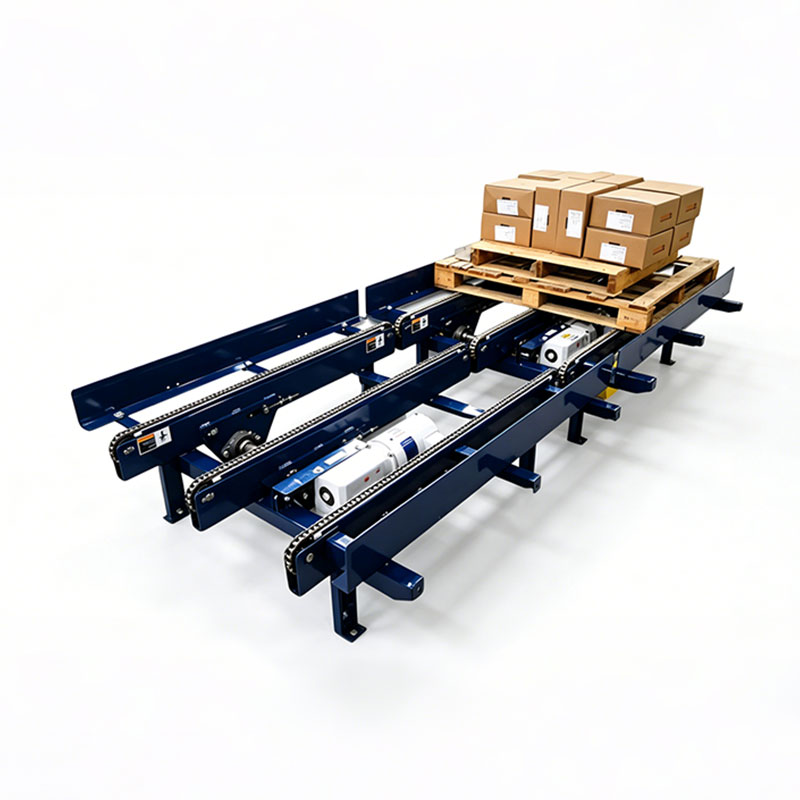
Functions and Features: Chain conveyors use chains as the transmission medium to move materials, suitable for heavy or high-temperature loads. Chain and plate materials can be customized for different industrial environments, allowing them to withstand high loads and complex transport conditions.
High Load Capacity: Suitable for transporting steel, mechanical parts, and automotive components.
Durability: Chains and plates made of wear-resistant or alloy steel extend service life.
Complex Path Transport: Can operate along straight, curved, inclined, or vertical paths for versatile routing.
Multi-functional Integration: Can work with pushers, sorters, or flipping devices for automated production lines.
Applications: Steel, casting, and automotive manufacturing/ High-temperature or heavy-duty industrial environments/ Heavy material handling
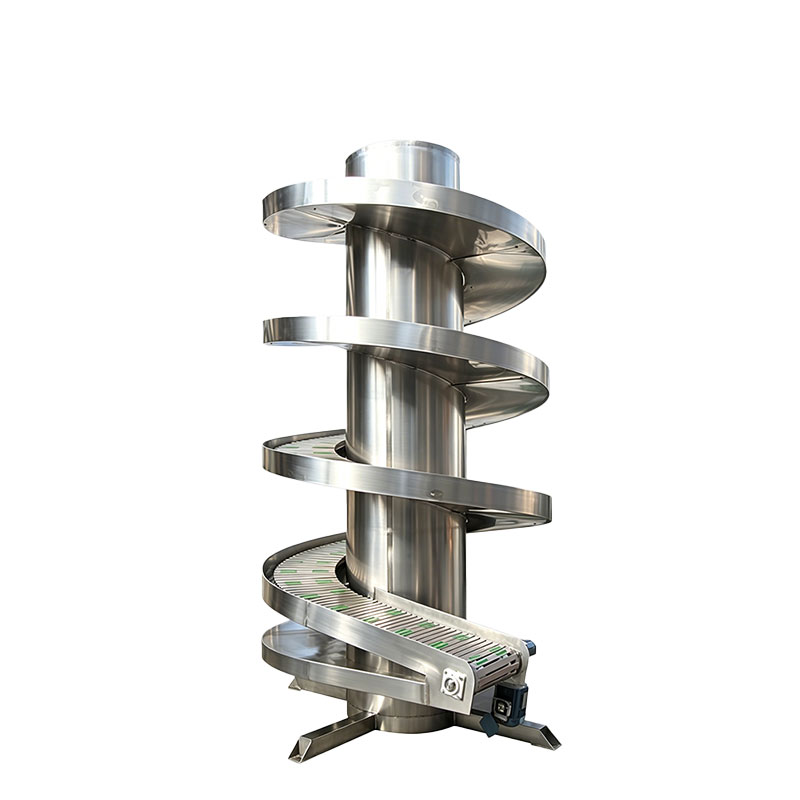
4) Screw Conveyor (Auger Conveyor)
Functions and Features: Screw conveyors transport bulk materials through a rotating helical blade inside a tube, suitable for powdered or granular materials. The enclosed design prevents material spillage and environmental contamination, and the conveyor can operate horizontally, inclined, or vertically.
Enclosed Transport: Reduces dust and material loss, maintaining a cleaner production environment.
Versatile Material Handling: Suitable for powders, granules, grains, and feed.
Flexible Layout: Can transport materials horizontally, inclined, or vertically, saving floor space.
Easy Maintenance: Removable screw blades allow for convenient cleaning, ideal for hygiene-sensitive industries.
Applications: Food processing (flour, grains, sugar)/ Chemical powder transportation/ Agriculture and feed industries
5) Vibratory Conveyor
Functions and Features: Vibratory conveyors use vibration to move materials along a trough. This method reduces impact and damage to fragile materials, making it ideal for handling granular, powdered, or delicate items. Vibratory conveyors can also perform cooling, screening, and sorting functions, combining transport with processing.
Minimized Material Damage: Suitable for fragile or breakable materials, maintaining integrity.
Screening and Sorting Capability: Adjustable vibration frequency and amplitude allow grading or debris removal.
Energy Efficient and Quiet: High energy transfer efficiency with low noise operation.
Multi-functional Integration: Can simultaneously convey, cool, dry, or measure materials.
Applications: Food processing industry/ Electronic component assembly lines/ Chemical granular and powder handling
3. Principles for Selecting Basic Conveyor Equipment
Material Characteristics: Consider shape, size, weight, and fragility when choosing the appropriate conveyor type.
Transport Distance and Angle: Belt conveyors are suitable for long distances; roller or chain conveyors handle complex routes better.
Operating Environment: High temperature, corrosive, or cleanroom environments require specialized materials or designs.
Load and Efficiency Requirements: Heavy loads or high-speed production lines need conveyors with high stability and load capacity.
Maintenance Costs: Simpler structures with easily replaceable components reduce long-term maintenance costs.
4. Conclusion
Basic conveyor systems are the backbone of industrial automation and efficient material handling. Each type of conveyor offers unique advantages:
Belt Conveyor: Continuous, smooth, high-volume transport
Roller Conveyor: Heavy-load support, flexible sorting and turning
Chain Conveyor: High load, heat-resistant, complex path transport
Screw Conveyor: Enclosed, space-saving, suitable for powders and granules
Vibratory Conveyor: Gentle on fragile materials, multi-functional
Choosing the right conveyor system enhances productivity, reduces labor costs, and lowers maintenance expenses. Understanding the functions and applications of basic conveyor equipment is the first step toward building an efficient automated production line.

- Anodized Aluminum Rolls vs. PTFE-Coated Aluminum Rolls: What’s the Difference?
- Steel Rolls vs. Aluminum Rolls: How to Choose the Right Roller for Your Line
- Choosing the Right Air Shaft for Web Handling
- Industrial Cleaning Brush Rollers Factory
- Industrial Brush Rollers Factory
- Three common industrial applications of brush rollers
- Is Hard Chrome Plating Enough for Stretch Rolls?
- Explosion proof electric roller