
Brush Roller Factory
Brush Roller Factory: Where Bristle Meets Precision Engineering
Every production line that cleans, deburrs, polishes or conveys has a quiet workhorse at its heart: the brush roller. It is the cylinder of bristles that scrubs circuit boards between process steps, sweeps debris from conveyor belts, polishes metal strip, conditions glass before coating and finishes wood panels at line speed. Simple in idea, exacting in manufacture: a brush roller must hold its bristles at the right density, trim length and pattern; it must run concentric on its shaft at production speeds; and it must keep doing it for millions of rotations. That is why serious buyers do not order brush rollers from a catalogue - they order from a brush roller factory that controls the whole process: shaft, brush body, bristle material, balance and test. This article explains what a brush roller is, how a dedicated factory builds one, and why AstraRoll's brush roller factory has become a supplier of choice for cleaning and finishing lines around the world.
What Is a Brush Roller?
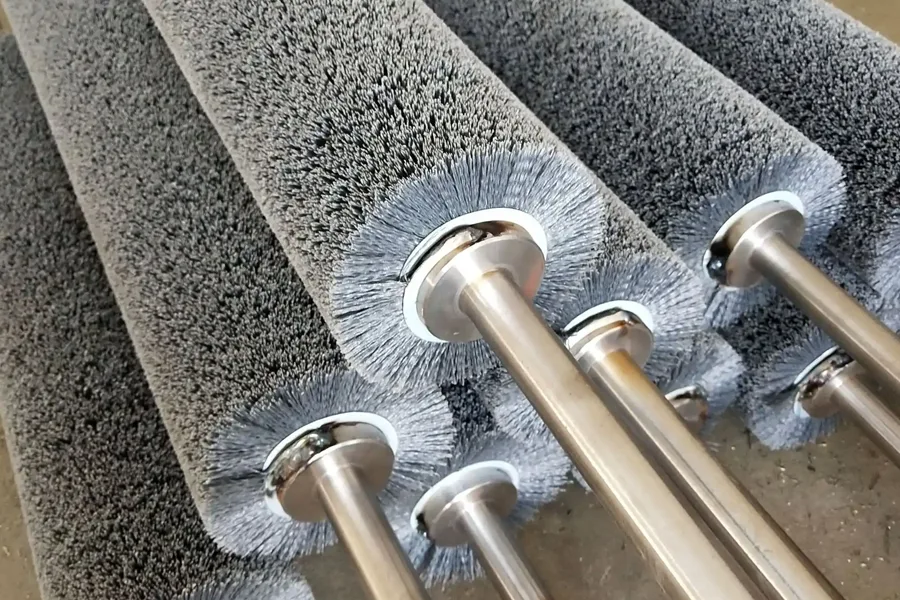
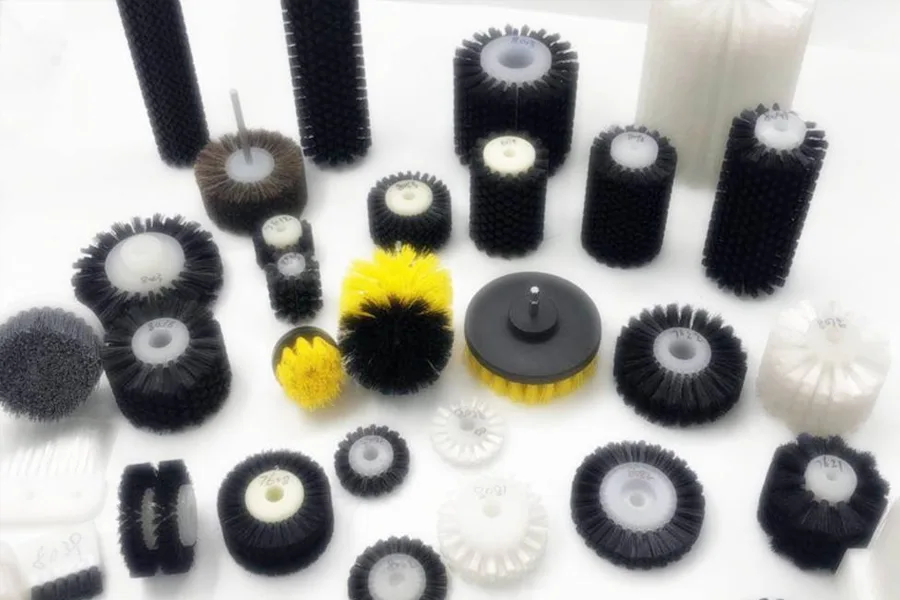
A brush roller is a rotating cylinder covered with bristles - natural or synthetic - mounted on a shaft, driven by a motor, and positioned against a material surface to clean, deburr, polish, texture or convey. The bristles do the work; the shaft and body do the precision. The roller's performance depends on four variables that a factory must control together:
- Bristle material - nylon (standard or abrasive-impregnated), polypropylene, steel wire, brass wire, horsehair, hog bristle or mixed fill.
- Bristle density and trim length - how many bristles per square centimetre, and how far they extend, which sets the cleaning aggressiveness.
- Bristle pattern - straight rows, wavy, spiral or helical windings, each suited to a different duty.
- Concentricity and balance - how true the whole assembly runs on the shaft, which decides vibration, wear and finish quality.
The Main Types of Brush Rollers
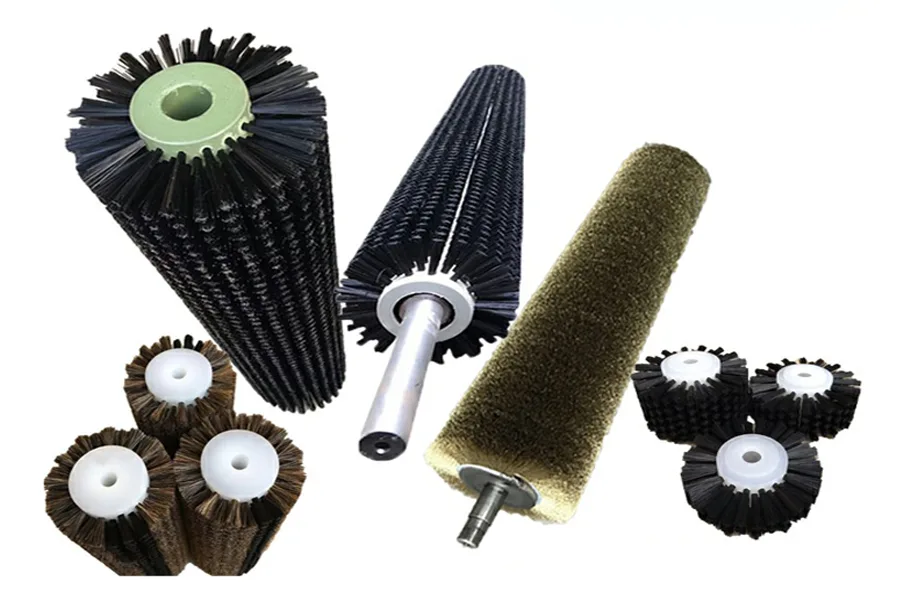
A complete brush roller factory produces the full family, because each line needs a different bristle:
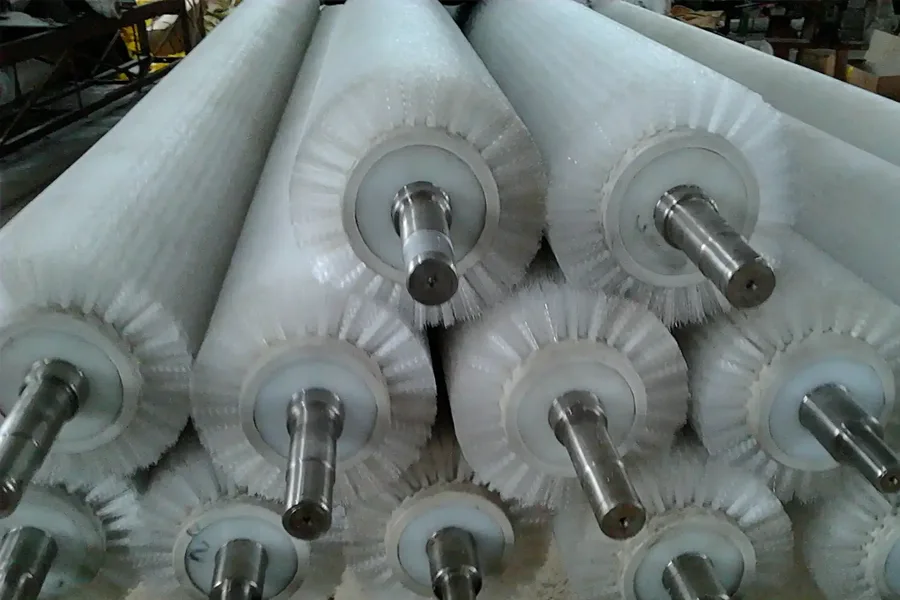
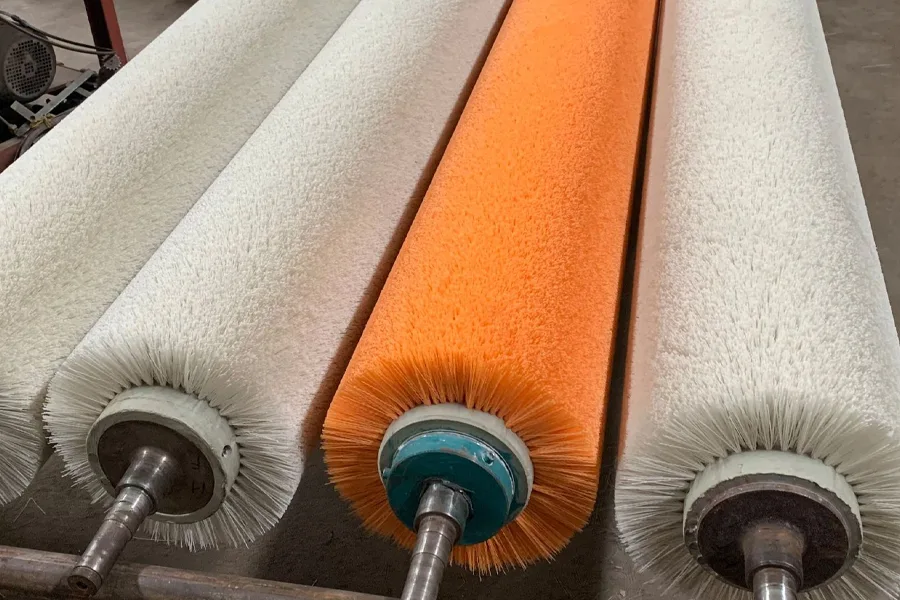
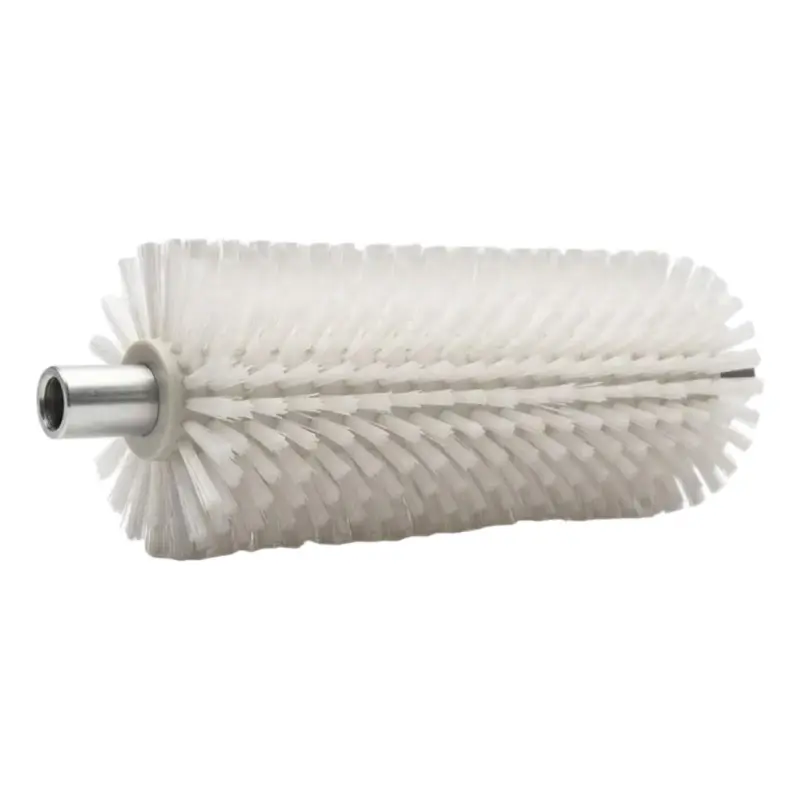
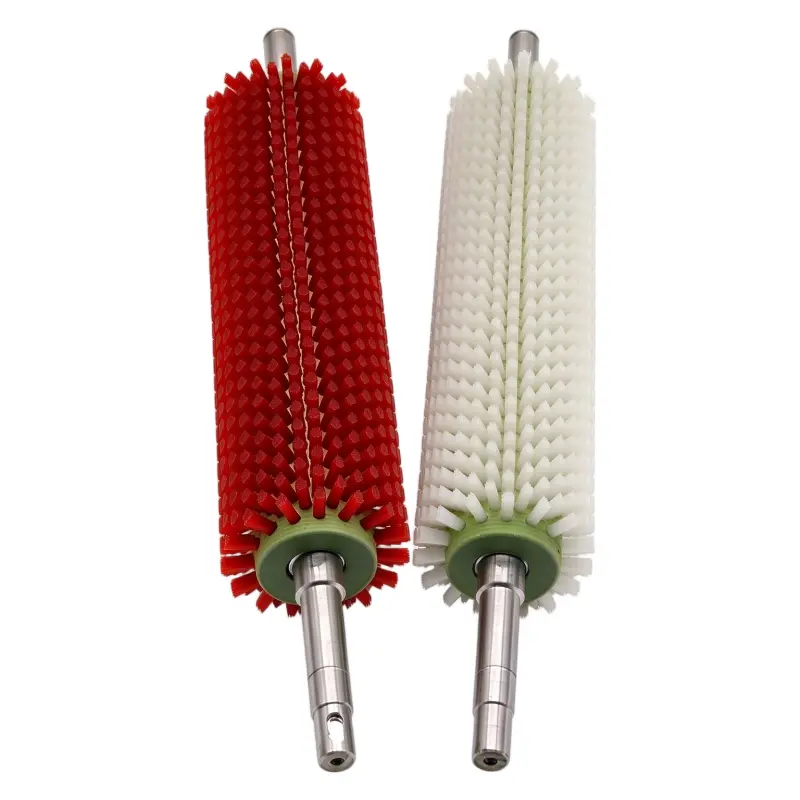
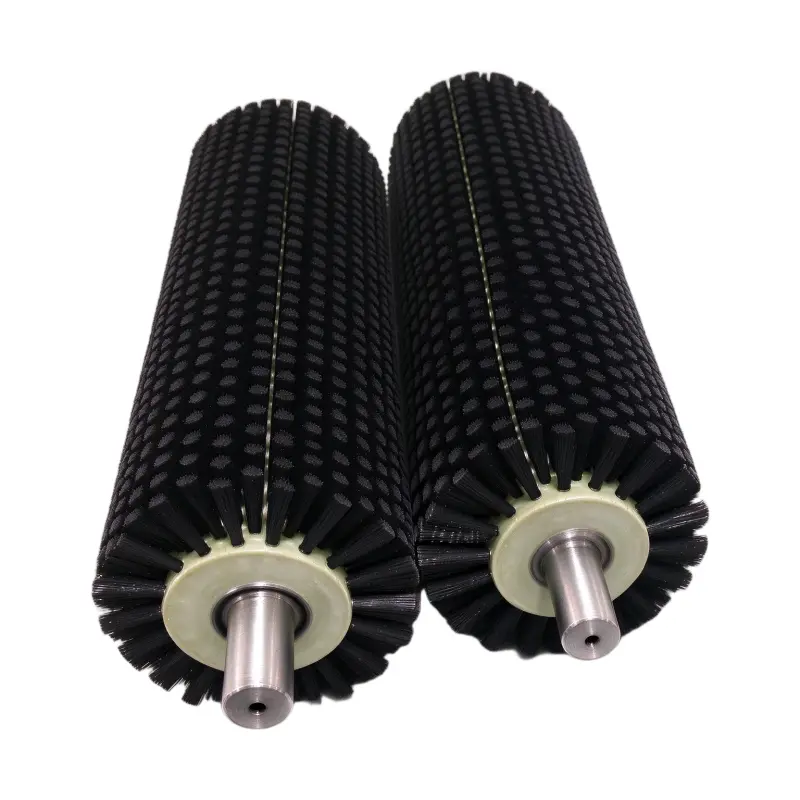
- Nylon brush rollers - the general-purpose standard: wear-resistant, chemical-resistant, suitable for wet or dry cleaning of PCB panels, glass, metal and plastic.
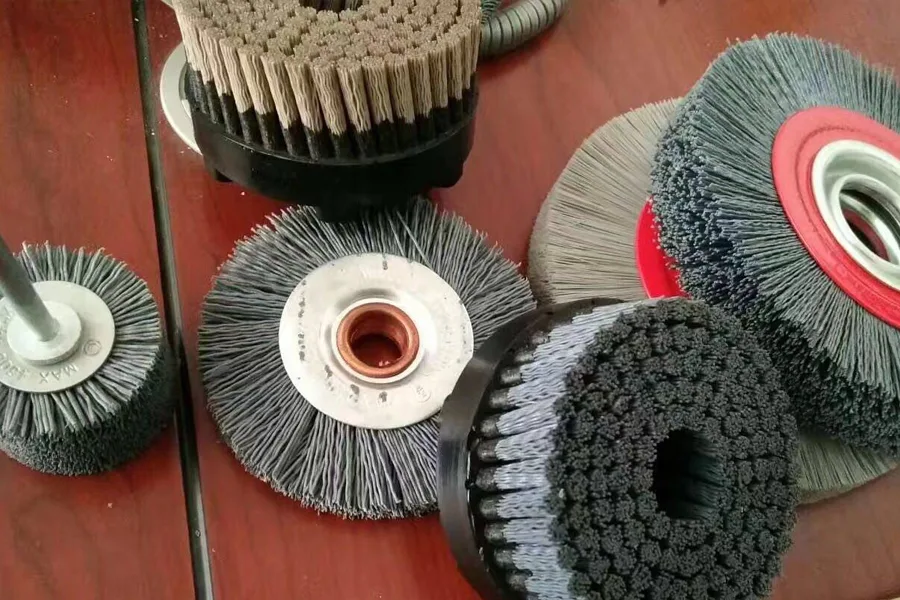
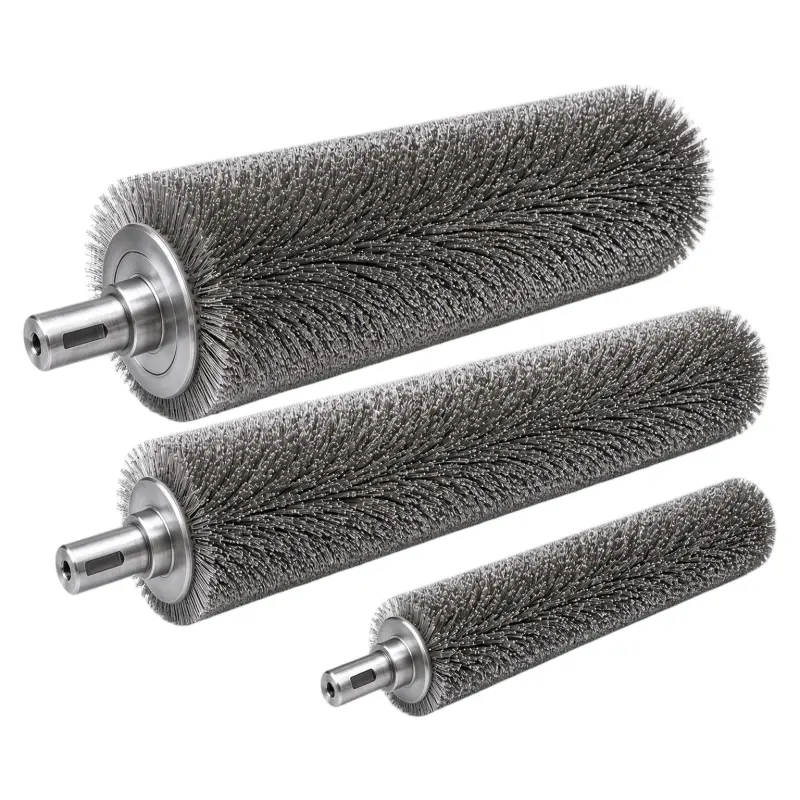
- Abrasive nylon brush rollers - nylon filaments impregnated with silicon carbide, aluminium oxide or diamond grit, used for deburring, oxide removal and surface conditioning where a brushing action, not a grinding wheel, is wanted.
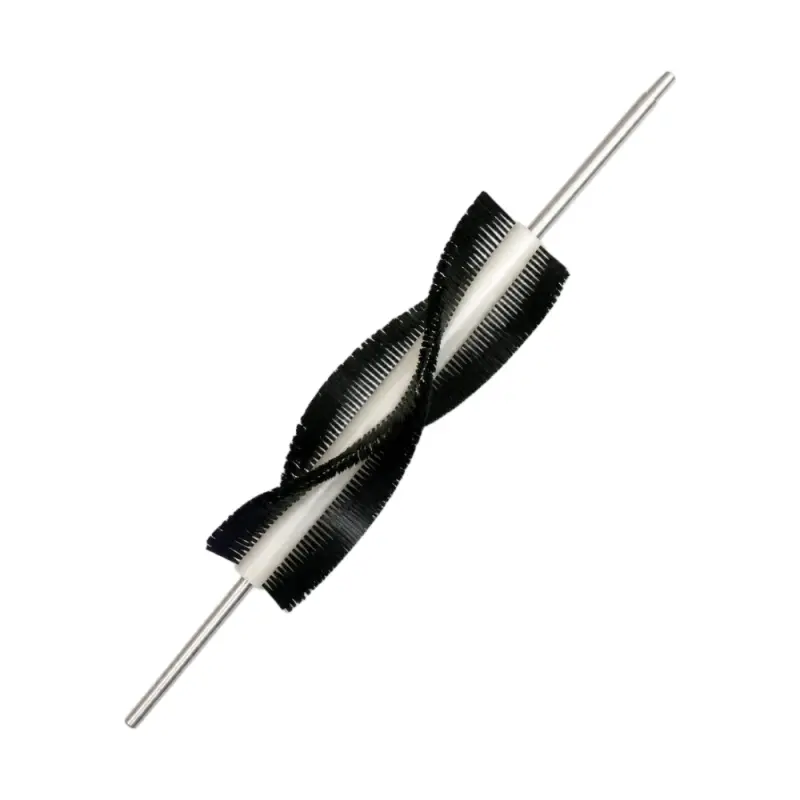
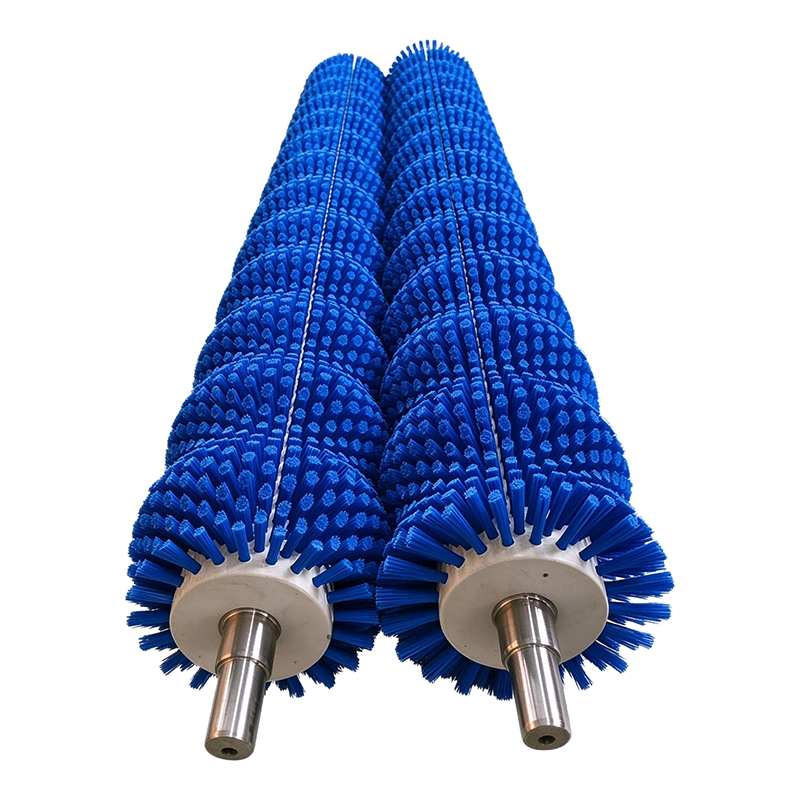
- Spiral (helical) brush rollers - bristles wound in a continuous spiral, giving even coverage and effective material cleaning or conveyor debris removal.
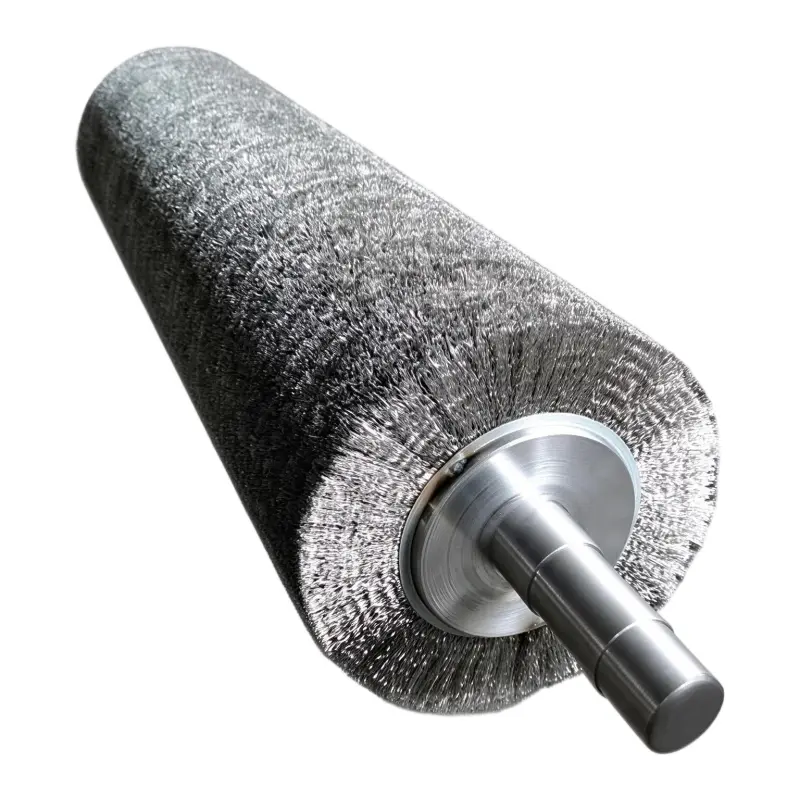
- Steel and brass wire brush rollers - for heavy descaling, weld cleaning and aggressive surface preparation.
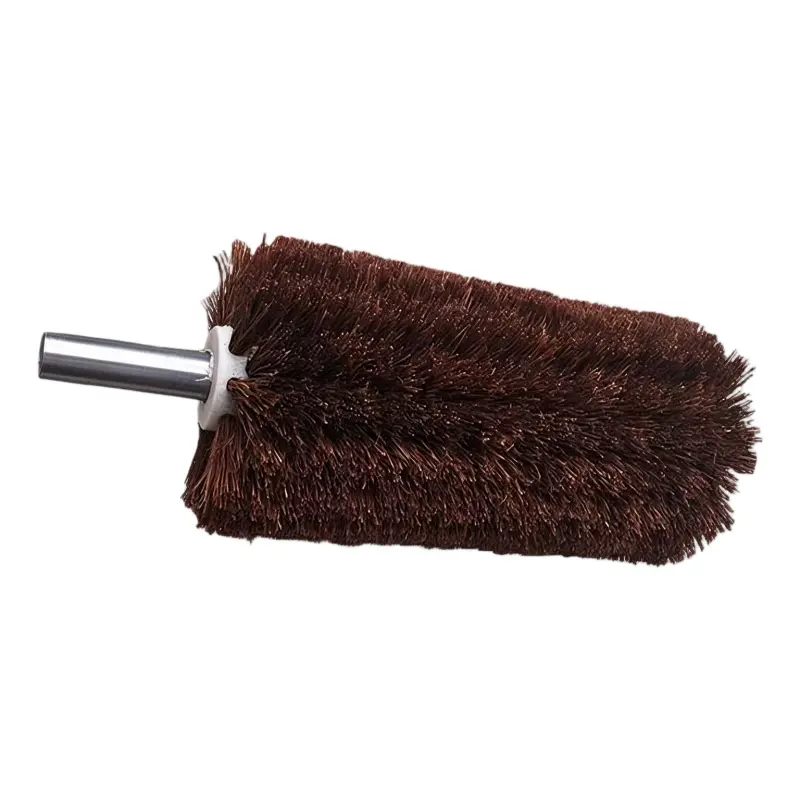
- Natural bristle rollers - horsehair and hog bristle for delicate polishing of sensitive surfaces (glass, coated metals, wood).
- Conveyor cleaning rollers - dedicated to belt cleaning and debris removal in bulk-handling systems.
Each type is built to order: outer diameter, working length, shaft diameter, bristle material, trim length and mounting are all specified by the customer's machine.
Inside the AstraRoll Brush Roller Factory
AstraRoll's brush roller workshop is a dedicated production line, not a general machining shop that makes brush rollers "when there is time." The process runs in controlled stages:
Shaft machining. The shaft - stainless steel (304/316) or carbon steel - is cut, turned and ground on CNC lathes to the customer's journal, keyway and end-fitting specification. Straightness and journal tolerance are held to precision standards, because a roller that is out of true will vibrate, wear unevenly and mark the product it is cleaning.
Brush body construction. The cylindrical core - steel, aluminium or rigid plastic depending on the application - is machined to the specified outer diameter, and the bristle-holding channels or drilled patterns are prepared. For spiral rollers, the helical grooves are cut to a constant pitch so the winding lays down evenly from end to end.
Bristle filling or winding. Bristles are set by the method the design requires: drilled and filled rows for straight-pattern brushes, stapled or glued strips for replaceable sections, or spiral winding for helical brushes. Abrasive nylon filaments are cut to a uniform trim length and set at the specified density - the two variables that determine whether the roller cleans gently or aggressively.
Trimming and finishing. After filling, the bristle surface is trimmed to a precise radius on a trimming machine, giving a perfectly cylindrical brushing face. This trim is what makes contact even across the full working length.
Balancing and run test. Every finished brush roller is dynamically balanced and run-tested at operating speed, checking concentricity, vibration and bristle contact. The test report accompanies the roller.
Materials and Quality Control
- Shafts and cores - stainless steel for wash-down and corrosive lines; carbon steel for general duty; aluminium and plastic cores where weight matters.
- Bristles - virgin nylon grades (6, 6.6, 612), abrasive nylon (silicon carbide, alumina, diamond), steel and brass wire, and selected natural bristles, all sourced for consistency.
- QC stages - incoming material verification, in-process dimensional checks, bristle-density sampling, dynamic balancing and a final run test under load, with inspection reports for every batch.
- Documentation - material certificates and balancing reports are supplied for regulated industries (food contact, electronics, glass).
Industries We Supply
AstraRoll brush rollers are running in:
- PCB and electronics - deburring, scrubbing and oxide-removal lines
- Metal processing - strip cleaning, pickling lines, polishing and descaling
- Glass manufacturing - washing lines for flat and laminated glass
- Wood and panel processing - dust removal, sanding support and surface conditioning
- Food and beverage - conveyor and container cleaning with food-grade materials
- Converting and film - web cleaning before coating and lamination
- General conveying - conveyor belt and roller surface cleaning
Custom Engineering: Your Machine, Our Factory
Almost every AstraRoll brush roller is custom, because every machine has its own diameters, lengths and mounting. A typical order works like this:
- You send a drawing, a worn-out brush roller, or a set of parameters: outer diameter, working length, shaft size, bristle material, trim length, mounting ends.
- Our engineers review the design within two working days and flag anything that could compromise cleaning or running quality.
- You receive a price, lead time and, where needed, a tooling quote.
- Sample rollers are produced and shipped for a line test.
- Bulk production follows sample approval, with balancing and run-test reports attached.
If you only have an old brush roller from an OEM that is no longer available, we reverse-engineer it: match the body dimensions, bristle density and pattern, shaft and mounting exactly.
Why Buyers Choose an AstraRoll Factory
- One-factory responsibility - shaft, brush body, bristles, balance and test under one roof; one warranty for the complete assembly.
- Factory-direct pricing - you pay the factory, not a trading company's margin.
- Real engineering - you talk to engineers who understand cleaning lines, bristle materials and line speeds, not sales scripts.
- Test-first process - sample rollers prove the design before you commit to a production order.
- Documented quality - balancing reports, dimensional inspection sheets and material certificates with every shipment.
- Full product family - brush rollers, air shafts, conveyor rollers and pulleys from one factory for complete line supply.
Common Questions Buyers Ask
What sizes can you make? We produce brush rollers from roughly Ø60 mm to Ø500 mm outer diameter, working lengths from 100 mm to over 3,000 mm, and shaft diameters from Ø10 mm to Ø80 mm or to your journal specification. Custom sizes beyond these ranges are quoted individually.
What bristle should I use for my application? It depends on your material and process: standard nylon for general cleaning, abrasive nylon (SiC or alumina) for deburring and conditioning, steel wire for heavy descaling, natural bristle for delicate polishing. Send us your material, line speed and process chemistry and we will recommend the bristle.
Can you match my existing brush roller? Yes. Send us your old roller or its drawings and we will reverse-engineer it - dimensions, bristle density, trim length, pattern and mounting — so the replacement drops straight into your machine.
Do you test rollers before shipping? Every roller is dynamically balanced and run-tested under load, and the reports are included with the shipment.
What is your MOQ and lead time? For standard brush rollers, MOQ is typically 2–5 pieces with 10–15 working days delivery; custom or OEM rollers are 20–35 days after drawing confirmation. Samples are produced in 7–10 working days.
Get a Quote from the Brush Roller Factory
If you are comparing brush roller factories in China - or tired of rollers that vibrate, wear unevenly or shed bristles - send us your drawing or a sample roller. Our engineers will reply within two working days with a feasibility review, price and lead time. AstraRoll: the brush roller factory where bristle meets precision engineering.